

Where the Mediterranean Diet inspires foreign policy
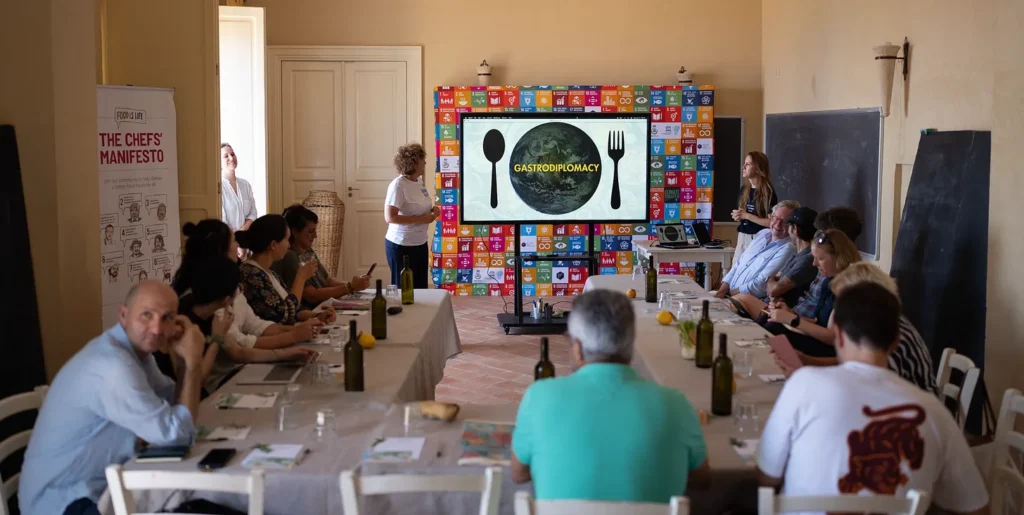
Every June, Pollica stops being only a hilltop village in Cilento and becomes a strategic laboratory for one of the most urgent questions of our time: how can food become the language through which we build peace, health, prosperity and resilience? For the fifth consecutive year, our community has hosted the international ecosystem of gastrodiplomacy and turned the Paideia Campus into a global workshop of knowledge, culture and leadership.
This year, the gathering carried a new weight. It is one of the first major milestones on the road toward the inaugural International Day of the Mediterranean Diet on 16 November, a historic recognition that elevates the Mediterranean Diet from cultural heritage to a global model for health, climate action, food security, territorial regeneration and intercultural dialogue. In this perspective, the GastroDiplomacy Leadership Bootcamp is not a one‑off training, but a strategic device to shape the next generation of food leaders and public policies.
Why Pollica Is the Right Place to Rethink Food Power
Pollica is an Emblematic UNESCO Community of the Mediterranean Diet, the landscape that inspired Ancel Keys and continues to prove that the Mediterranean Diet is not just a way of eating but a systemic way of living. Here, biodiversity, health, culture, landscape, economy and human relations are woven into a single fabric that makes the territory itself a living syllabus.
Over the years, together with the Municipality of Pollica e il “Angelo Vassallo” Mediterranean Diet Study Center, Future Food Institute has developed Paideia Campus as an open‑air school of integral ecology where research, education, social innovation and cooperation meet every day. Hosting the Bootcamp here is an intentional political choice: we want global decision‑makers and emerging leaders to experience a bioregion that already prototypes the transition we are asking the world to embrace.
Building a New Discipline at the Intersection of Kitchen, Policy and Culture
The strength of the Bootcamp lies in its ecosystem. We convene chefs, researchers, anthropologists, economists, diplomats, communicators, designers, innovators, ocean experts, international organisations and local communities around one shared conviction: no single discipline can govern the complexity of food systems. For one intensive week, this diversity becomes our main asset, transforming Pollica into a field laboratory of transdisciplinary problem‑solving.
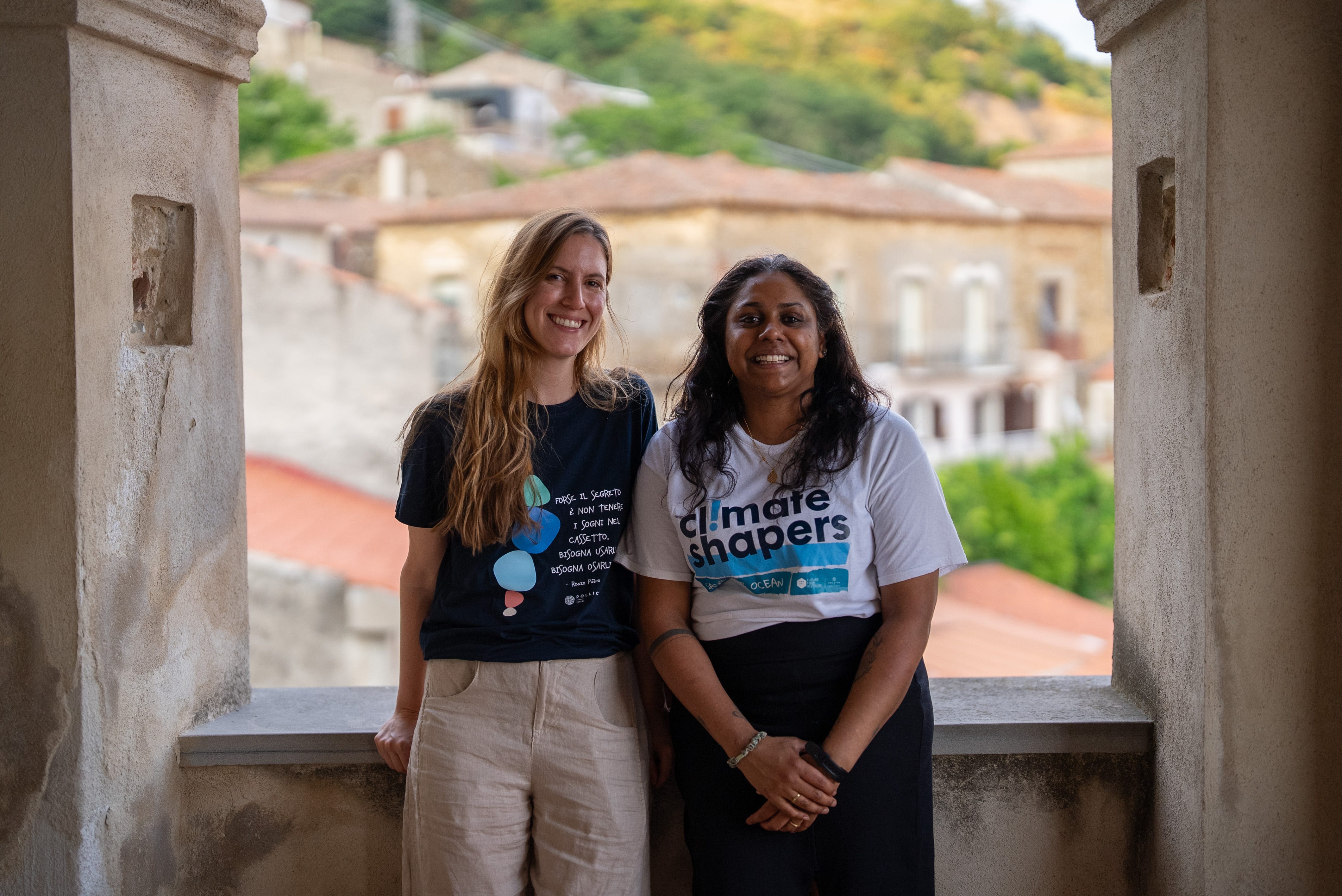
Within this setting, leaders like Sandhya Kumar e Alegría Serna, at the helm of the Food Alchemist Team, demonstrate that the kitchen can be a space of education, social innovation and intercultural dialogue where every ingredient is a design brief for the future. Their practice blends food design, science communication and community engagement, proving that cooking is an act of policy prototyping as much as an act of hospitality.
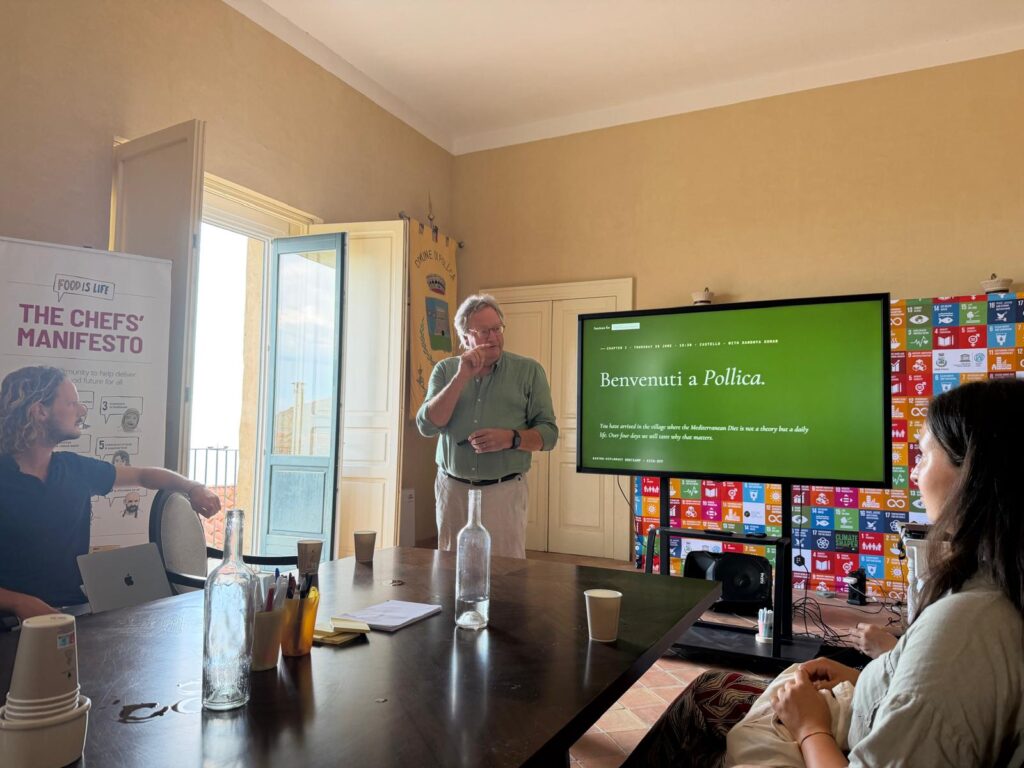
Professor Peter Klosse and Jan Kees Klosse, TASTE Research, challenged us to rethink gastronomy itself. Through the emerging framework of Vital Gastronomy, they argue that food decisions should no longer be guided by flavor alone, but by the convergence of taste, health, ecology, and craftsmanship. Gastronomy, in this vision, becomes a science of flourishing—one that helps people make food choices that are pleasurable, nourishing and regenerative at the same time. For Peter, internationally recognized as the “Professor of Taste,” flavor is far more than sensory perception: it is a form of cultural infrastructure that shapes our habits, our health, and ultimately our societies. Building on decades of research in flavor science, he has demonstrated that when people learn to appreciate quality, freshness, and complexity, they naturally move toward healthier and more sustainable food environments. Jan Kees Klosse extends this vision into education and systems transformation. By combining systems thinking, design methodologies and innovative pedagogies, he translates the principles of Vital Gastronomy into learning experiences that equip future chefs, food professionals and leaders to redesign food systems from the inside out. Together, they invite us to move beyond the false trade-off between what is good for us and what tastes good. Their message is both simple and radical: the future of food depends on making the healthiest and most regenerative choice the most desirable one. That is the promise of Vital Gastronomy—and one of the most inspiring intellectual contributions to this year’s GastroDiplomacy Leadership Bootcamp.
Heritage as a Strategic Infrastructure for Peace
Our work in Pollica starts from a clear assumption: heritage is not a postcard, it is infrastructure. Diane Dodd, founder of the International Institute of Gastronomy, Culture, Arts and Tourism and creator of the World Region of Gastronomy programme, has demonstrated how gastronomy can become public policy capable of regenerating territories, local economies and cultural identities. Anthropologist Habib Saidi extends this view, describing cultural heritage as a space of dialogue between communities, institutions and nations in which identities and cooperation are built through inclusive processes.
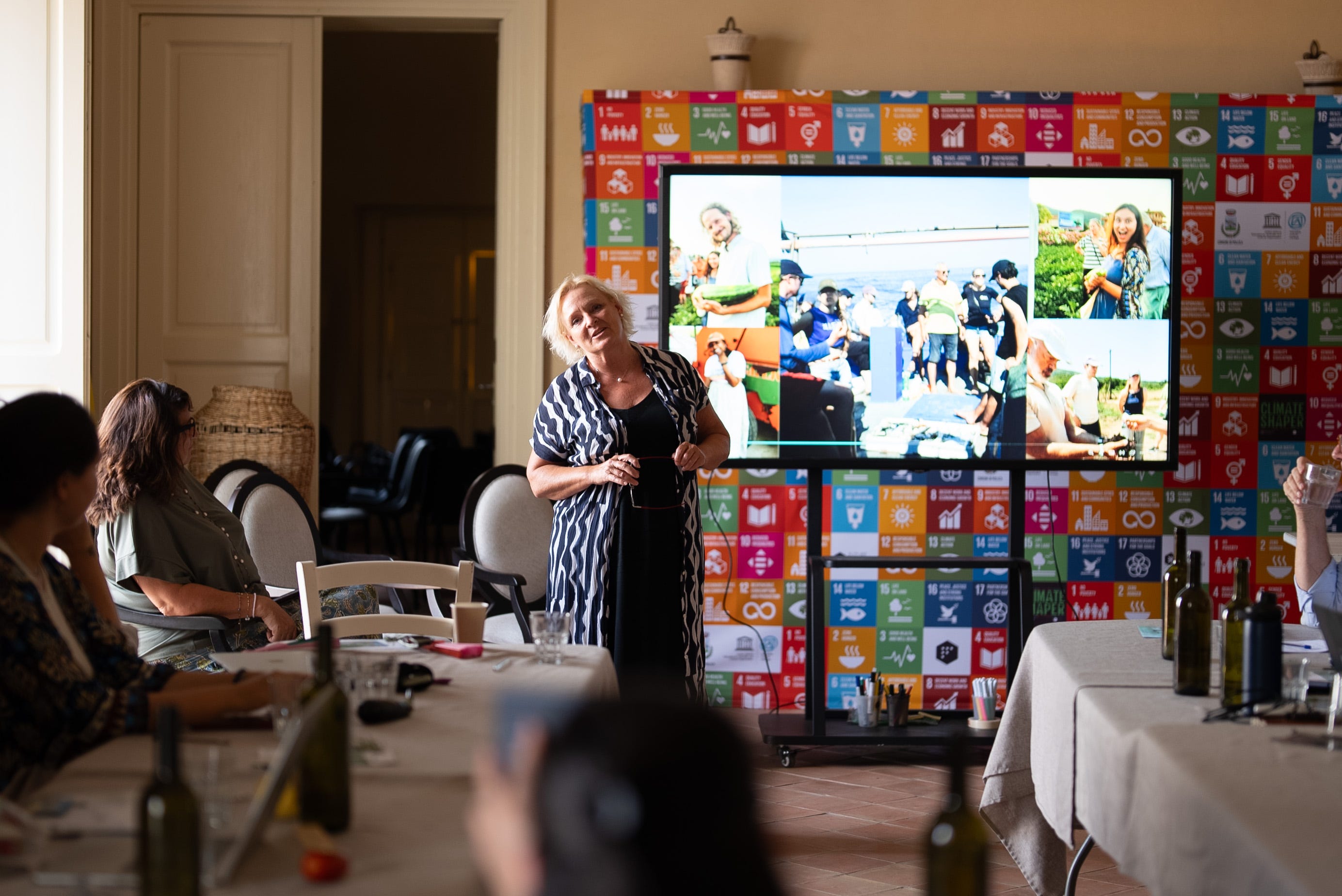
Together, they confirm a principle that guides our work in the Mediterranean: heritage is truly alive only when it enables shared development. For us, the Mediterranean Diet is no longer just something to protect; it is a platform we can deploy to build peace, economic resilience and climate‑smart development.
From Global Policy to Culinary Schools: Where Change Is Negotiated
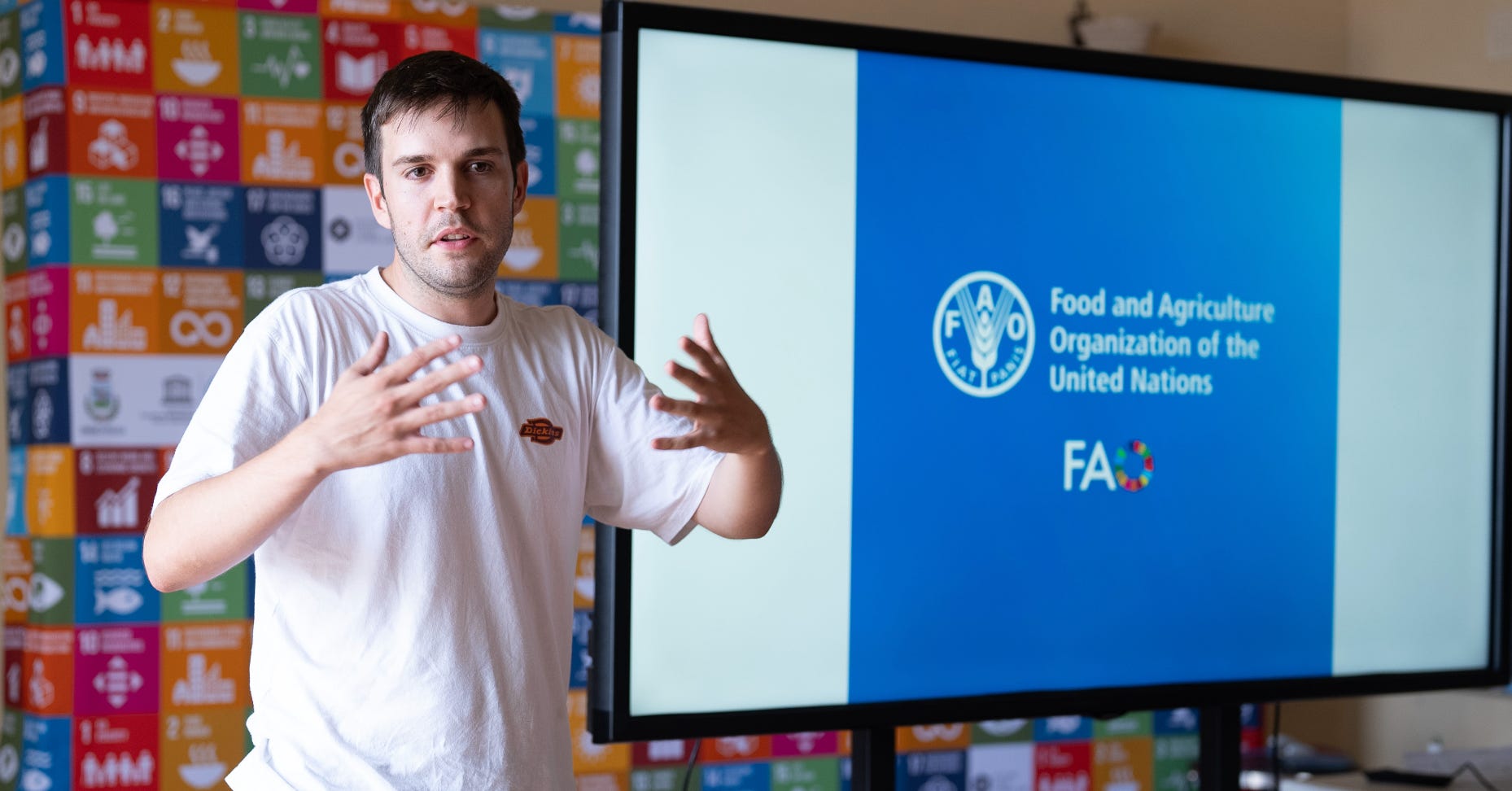
The Bootcamp intentionally bridges global institutions and everyday learning spaces. Through FAO economist Shujun Cheng, the programme integrates insights on healthy diets, food loss and waste and resilience strategies that underpin global food security, building on the FAO’s “Global Roadmap for Achieving Sustainable Development through Agrifood Systems Transformation.” Communication expert Eduardo “Edu” De La Chica reminds us that even the best evidence fails if it does not become a story that citizens, media and policymakers can own.
On the educational front, ALMA’s Candida D’Elia e Laila Ciocca show what it means to treat culinary schools as diplomatic academies. They build international networks between training centres, companies and young hospitality professionals, integrating gastronomy, food history and sustainability into the curriculum. Their message aligns with Pollica’s mission: schools of cuisine are training the next generation of cultural ambassadors and must therefore embrace climate literacy, biodiversity, the right to food and public policy as core competencies.
Oceans, Hospitality and the Everyday Practice of Diplomacy
Our horizon is not limited to land‑based agriculture. Sean Kolk’s work on ocean systems, coastal resilience and marine technologies underlines a simple truth: there is no future of food without a viable future for the oceans. Expedition sailor and futurist designer Kate Schnippering translates fragile marine ecosystems into tangible experiences that connect exploration, design and systemic change, making ocean health a central chapter of gastrodiplomacy.
On the ground, Sofia Marina Herber e Kristiana Skuja bring diplomacy into the daily grammar of hospitality. Sofia works on hospitality as a tool for territorial regeneration and community‑building, while Kristiana, chef at the British Embassy in Riga, proves every day that an embassy dining table can be a platform for honest dialogue between cultures. Pollica’s message here is clear: diplomacy does not only happen in ministerial corridors; it happens around the tables where we choose what stories to serve.
A Living Campus Where Generations Co‑Create the Future
L' Paideia Campus is designed as a living campus: an ecosystem where different generations, cultures and disciplines share the same space for one week and then carry that experience back to their territories. The Future Food Fellows embody this intergenerational bridge between scientific research and food system transformation.
Ryu Deguchi, a young Japanese researcher, connects microbiology, traditional fermentations, sake and Asian food cultures, revealing how microbial life forms an invisible heritage that links oceans, biodiversity and human communities. Jordan Plunger brings the perspective of sustainable mountain agriculture and resilient local value chains from the Alpine landscapes of South Tyrol, showing how every territory holds specific solutions for global challenges.
The Paideia Campus stands on a form of leadership that is often invisible, yet absolutely essential: the daily work of care. One detail struck me this year. Without anyone planning it, the team holding the Campus together turned out to be entirely made up of women and led by women. Not because of a deliberate choice, but because this is how the community naturally evolved. Perhaps there is something deeply connected between the work of cultivating relationships, caring for people, welcoming diverse cultures and creating the conditions for learning—and the kind of leadership these remarkable women embody every day. Program Manager Francesca Massoni coordinates programmes and international partnerships, ensuring that a global network of researchers, students and practitioners can learn, collaborate and grow together. Campus Director Clarissa Garubba is the heart of the Campus. She guides its educational vision, leads its daily operations and nurtures the community that brings the Paideia experience to life. Bringing together nutrition, gastronomy and education, she embodies the Mediterranean Diet not simply as knowledge, but as a way of living, caring and regenerating people and places.
Read the full article on Substack.