

A project dedicated to women undergoing cancer care is transforming the heritage of the Mediterranean Diet into a living experience of prevention, wellbeing and community regeneration.
“Il Mare più Bello d’Italia”. Once again.
Blue Flags. Environmental awards. Crystal-clear waters consistently ranked among the best in the country. A growing calendar of cultural events, music, art, gastronomy and new forms of hospitality. Over the last decade, Pollica and the Cilento region have become one of the Mediterranean’s most sought-after destinations.
Yet there is an important difference between admiring a result and understanding its roots.
Recognition often attracts attention. What remains less visible are the years of commitment, the courageous decisions, the ability to stay the course long before results become evident. And yet it is precisely there, beneath a long-term vision and a deep sense of stewardship, that the real value of a territory is created.
As Pollica’s international reputation continues to grow, I find myself asking a simple question:
Are we investing enough in protecting what makes these places extraordinary, or are we merely celebrating their success?
Because what truly matters is not only what attracts visitors. It is what generates wellbeing, strengthens communities, protects biodiversity and creates the conditions for lasting prosperity. It is the ability to develop skills, retain talent, inspire people to stay, care for the places they love and contribute to their future.
In an age obsessed with visibility and speed, perhaps the greatest challenge is to invest in what will endure beyond the summer season, beyond rankings and beyond short-term success.
The real capital of a territory is not measured by visitor numbers or social media impressions. It is measured by the capacity of its communities to transmit value, knowledge and purpose across generations.
This responsibility belongs not only to public institutions but also to businesses, civil society and local communities.
Over the years, important initiatives have emerged, including Campania Region’s vision of “Health and Wellbeing Villages,” built on the understanding that quality of life, prevention and longevity can become powerful drivers of territorial development.
But ideas alone are never enough.
What matters is the ability to translate them into long-term strategies, coherent investments and tangible opportunities for local communities.
When a territory holds a unique heritage, the challenge is not simply to promote it. The challenge is to ensure that it continues to generate value.
This means retaining talent, strengthening social capital and building development models capable of connecting identity, health, culture and economic opportunity.
From this perspective, Pollica is more than a destination.
It becomes a living laboratory.
A place where the Mediterranean Diet can once again be understood for what it has always been: an extraordinary infrastructure for wellbeing, resilience and intergenerational prosperity.
Pollica’s global reputation does not stem from an artificial attraction. It comes from its role as one of UNESCO’s Emblematic Communities of the Mediterranean Diet and from its ability to safeguard one of humanity’s most valuable cultural heritages.
There are places whose heritage becomes so deeply embedded in everyday life that it risks becoming invisible.
This is the paradox of living heritage.
When something becomes part of daily life, it is often taken for granted.
In Pollica, that risk is real.
Yet it is here that some of the world’s most influential longevity studies have helped reveal the profound connection between nutrition, environment, social relationships and health.
Longevity in these communities has never been an abstract theory or a statistical outcome.
It is the result of authentic relationships, natural movement, simple and diverse foods, daily contact with nature and a strong sense of belonging.
What we now call integral wellbeing has been, for generations, a way of life.
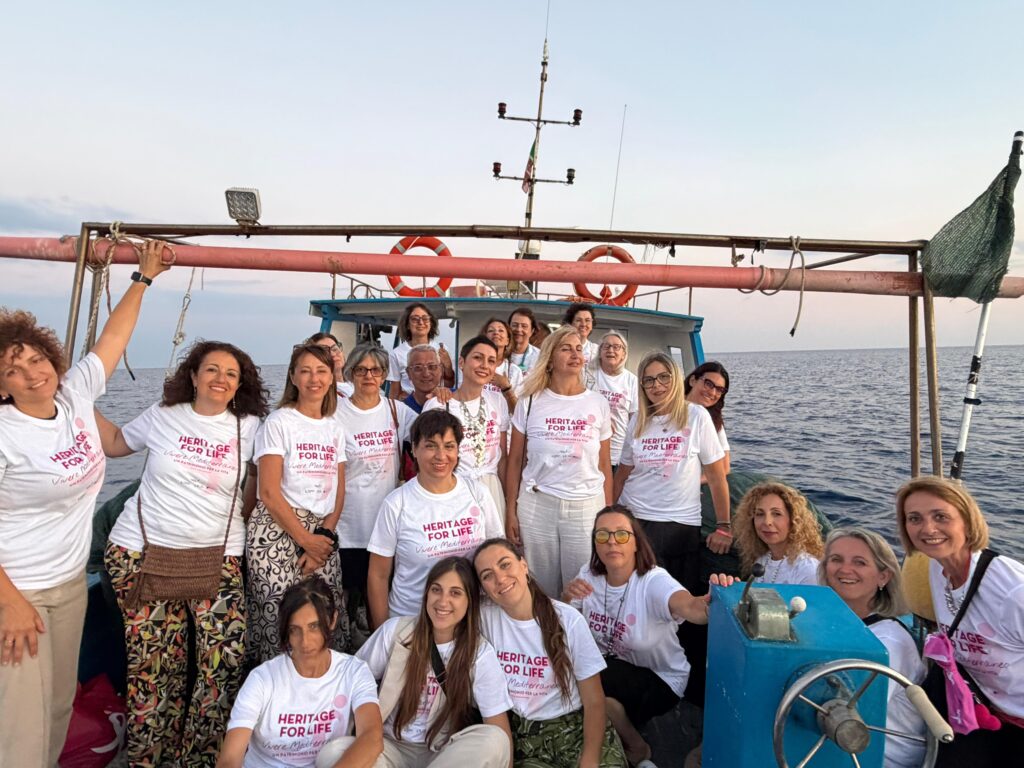
It is from this vision that Heritage for Life was born.
The program views the Mediterranean Diet not as a set of dietary prescriptions, but as an integrated model of care.
Research has long documented its benefits for longevity and health. Today we understand that its value extends far beyond nutrition, encompassing relationships, nature, physical activity, conviviality and community belonging—the very social determinants of health.
In Pollica, women undergoing cancer care participate in an immersive experience that combines nutrition, physical activity, health education, nature and community support, complementing clinical care with a culture of prevention and quality of life.
At a time when healthcare systems are under increasing pressure, Heritage for Life raises an important question:
What if territories themselves became part of public health strategies?
Read the full article on Substack.