

Why Venice Is A Live Stress Test For Our Future
We didn’t just miss the climate targets. We overdrew the planet’s water account.
The UN now calls it Global Water Bankruptcy: we have been living beyond our hydrological means for decades, treating rivers, aquifers, glaciers, and wetlands like bottomless bank accounts. It is no longer a metaphor. It is a balance‑sheet diagnosis of human–water systems that have spent both their income and their natural capital and can no longer return to their previous baseline.
I write this from Venice Climate Week, where I serve as one of the curators. For a week, I watched scientists, mayors, commissioners, entrepreneurs and teenagers sit around the same tables and come to the same conclusion: water is no longer an “environmental issue”. It is the operating system of everything else.
1. Beyond “Water Crisis”: What Global Water Bankruptcy Really Means
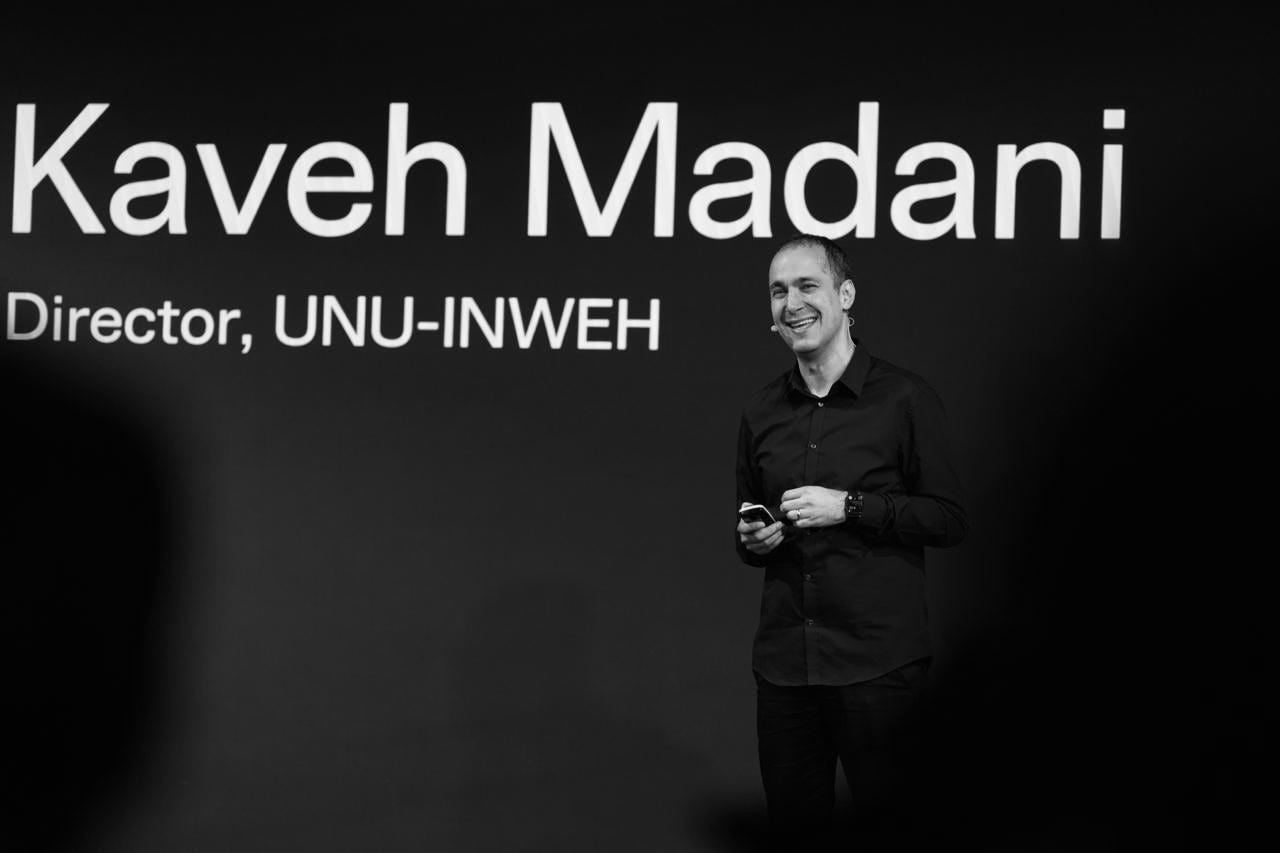
The new flagship report led by Kaveh Madani for the UN University Institute for Water, Environment and Health draws a clear line: talking about a “water crisis” is no longer enough. A crisis suggests an abnormal shock followed by a return to normal. In many parts of the world, that “normal” has already disappeared.
The report defines Global Water Bankruptcy as the condition in which, for years, societies withdraw and pollute more water than the hydrological cycle and natural reserves can replenish, causing irreversible damage to rivers, lakes, aquifers, soils, wetlands and glaciers. We are not only overusing annual flows (our income), we are liquidating long‑term natural capital.
The numbers are sobering:
- More than half of the world’s large lakes have been losing water since the 1990s.
- Around 2.2 billion people still lack safely managed drinking water, and about 3.5 billion lack safely managed sanitation.
- Nearly four billion people face severe water scarcity for at least one month per year.
In too many basins, we have burned through both income and capital: aquifers collapsing, cities subsiding, lakes vanishing, river deltas turning saline. This is no longer emergency management. It looks much more like a controlled administration of a system in structural default.
2. Why Venice Is The Perfect Stress Test
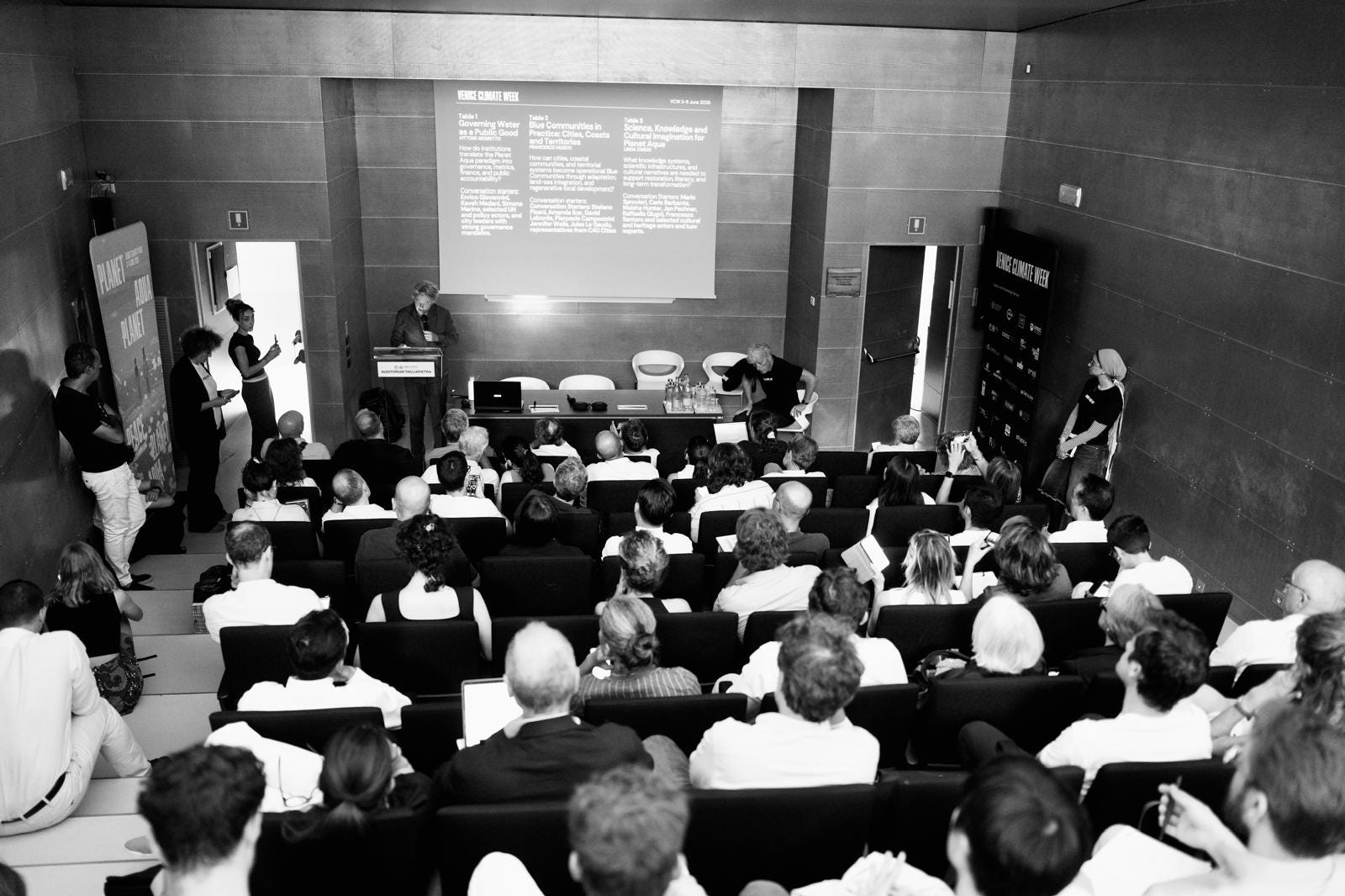
If there is one city that cannot afford fairy tales about water, it is Venice.
Here, water risk is not a slide in a presentation. It is high tide in your living room, subsidence cracking the foundations, a lagoon changing face season after season. At the same time, Venice is a unique open‑air laboratory where science, culture, and policy intersect every single day.
Even the “banalities” of daily management tell this story. The city’s hydrant network for fire prevention cannot simply use seawater: the salt would quickly corrode the city’s inestimable artistic and architectural heritage. Every hydrant is a working metaphor. Managing risk here means protecting lives and a millennia‑old built environment simultaneously.
Venice lives in permanent tension between vulnerability and protection, danger and care, fragility and resilience. This is exactly the kind of place where we must learn how to navigate the age of water bankruptcy without sacrificing the legacy we have inherited.
3. A New Vocabulary For The Anthropocene’s Water Economy
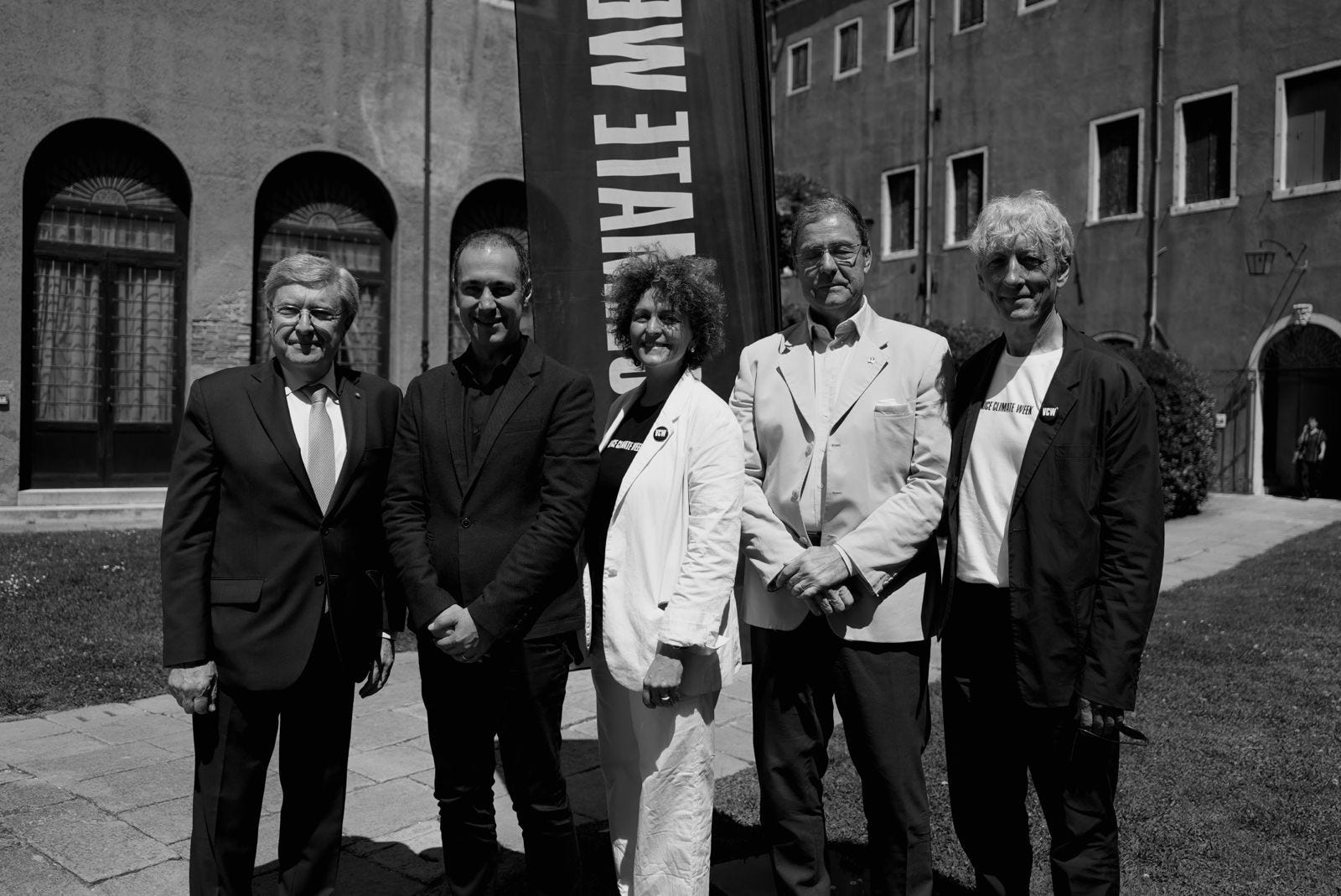
At Venice Climate Week, some of the world’s leading scientists turned the city into a global hub for water intelligence. Among them are the “hosts at home”: the Istituto Veneto di Scienze, Lettere ed Arti, led by hydrologist Andrea Rinaldo, the first Italian to receive the Stockholm Water Prize. Through decades of work on river networks as ecological corridors, he has shown that hydrology is not a niche discipline; it is the structural driver of ecosystems, public health, and economic risk.
When he invited us to imagine “Venice 2100”, the message was clear: living in a fragile landscape is not only a threat; it is also an accelerated masterclass in adaptation.
Meanwhile, Kaveh Madani, now Director of UNU‑INWEH, brought a new vocabulary for the Anthropocene’s water economy. In his framework, three categories matter for decision‑makers:
- Water stress: high pressure but potentially reversible impacts if governance is effective.
- Water crisis: acute, time‑bound shocks – extreme droughts or floods.
- Water bankruptcy: structural failure after decades of over‑extraction and degradation, when natural buffers are so eroded that the system cannot realistically be brought back to its prior state.
Madani’s message to governments and investors is disarmingly clear: it is no longer rational to pour capital into restoring an obsolete hydrological status quo. The priority must shift to bankruptcy management – protecting what remains of water‑related natural capital, cutting and reallocating demand across sectors, redesigning agriculture and industry, and ensuring just transitions for communities whose economies are built on the depletion of water assets.
In financial language: a global restructuring of water debt is now overdue.
4. Venice Climate Week As A Live Lab – And Europe Steps In
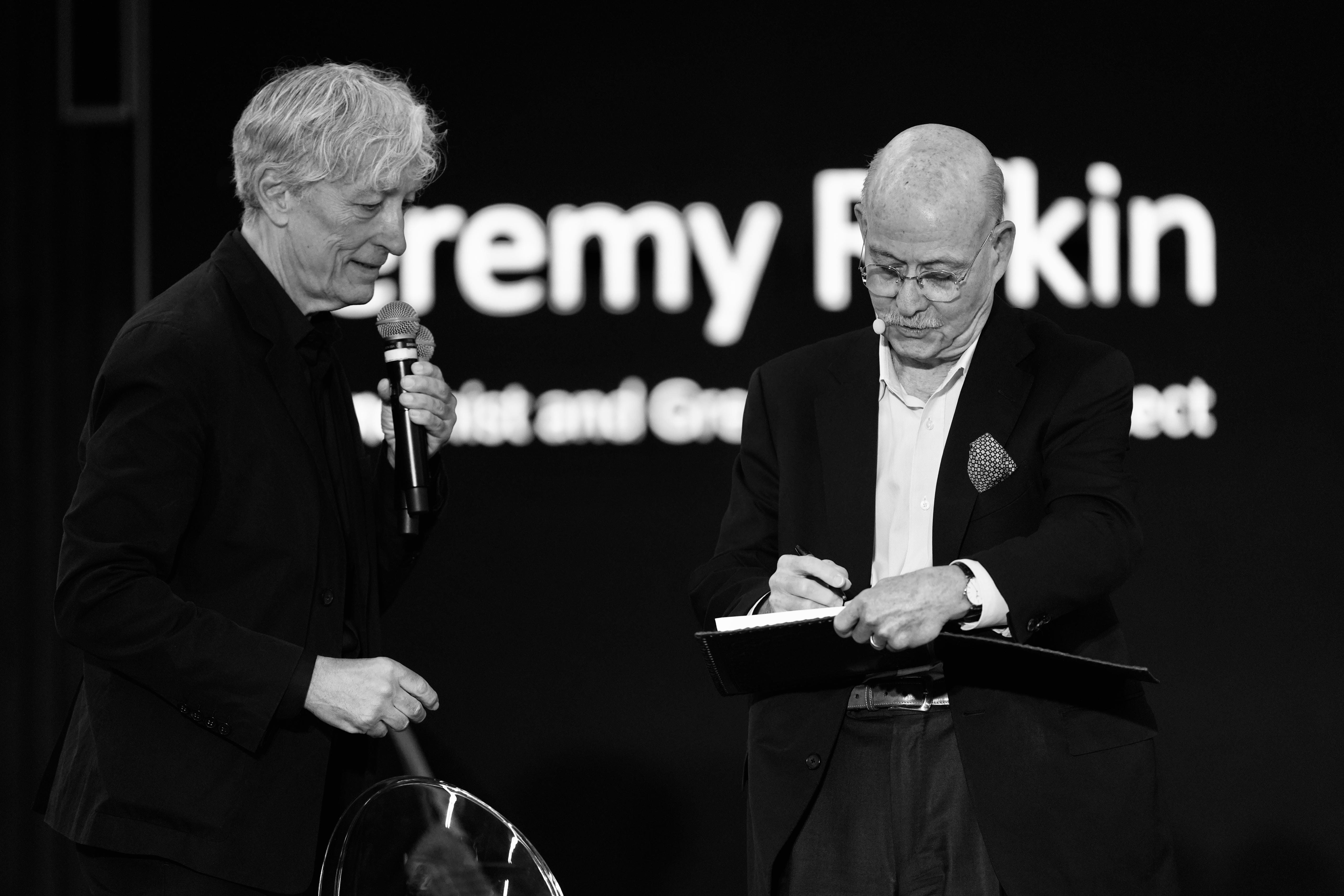
Riccardo Luna’s intuition was simple and radical: turn Venice into the lens through which to read this shift. He is the journalist who launched Wired in Italy, created the national network of “Digital Champions” to accelerate digital inclusion, and led marathon‑length civic campaigns up to a Nobel Prize nomination for the Internet. With that same determined yet gentle leadership, he has built a career on sensing system fractures and cultural emergencies before they hit the mainstream.
This time, he used that radar to reframe water as the organizing principle of the entire week: the invisible infrastructure of financial stability, the limiting factor for food and energy, the grammar of new urban planning, the backbone of climate education for the next generation. Under his guidance, and thanks to many partners, a one‑week programme became a full‑scale political and cultural lab.
Venice Climate Week was not a conference. It was a live device. From the launch of the Global Water Bankruptcy report to the high‑profile dialogue with economist Jeremy Rifkin on a “Water Declaration”, and from mayors to networks like C40 Cities working on “water cities”, the week staged something rare: water democracy in action.
At this stage, Europe stepped in with concrete policy measures. The new Water Directive 2026/805, which has just entered into force, tightens standards for water quality and ecosystem protection to make the continent more resilient to water scarcity and pollution, while advancing the EU’s zero‑pollution and water‑resilience ambitions.
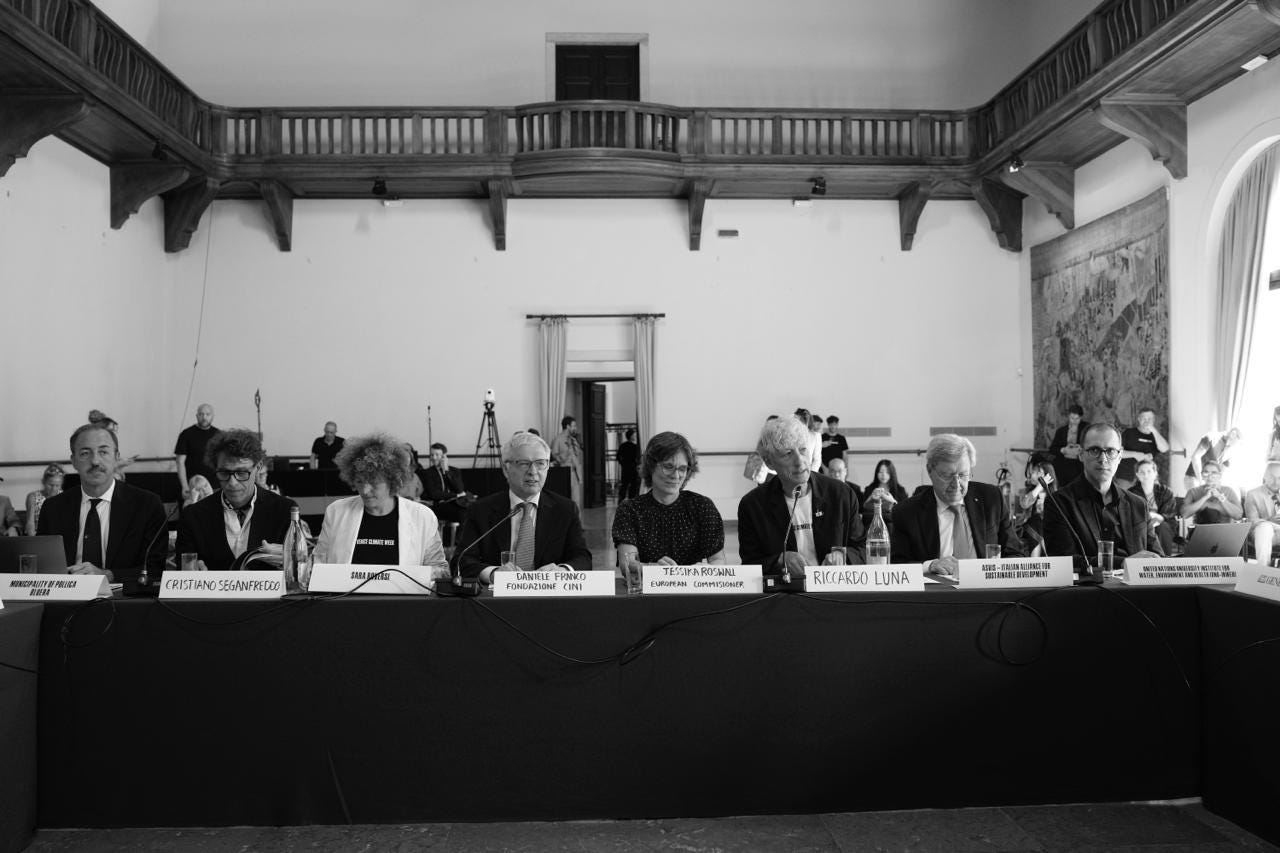
European Commissioner Jessika Roswall, for Environment, Water Resilience, and a Competitive Circular Economy, made the political point explicit in Venice: water must become one of the EU’s core strategic pillars, because it is where climate change becomes tangible for citizens, businesses, and security planners alike. In her framing, the European Water Resilience Strategy is a roadmap to restoring the water cycle, building a genuinely water‑smart economy, and ensuring safe access to water and sanitation for all.
5. The Case For Blue Communities
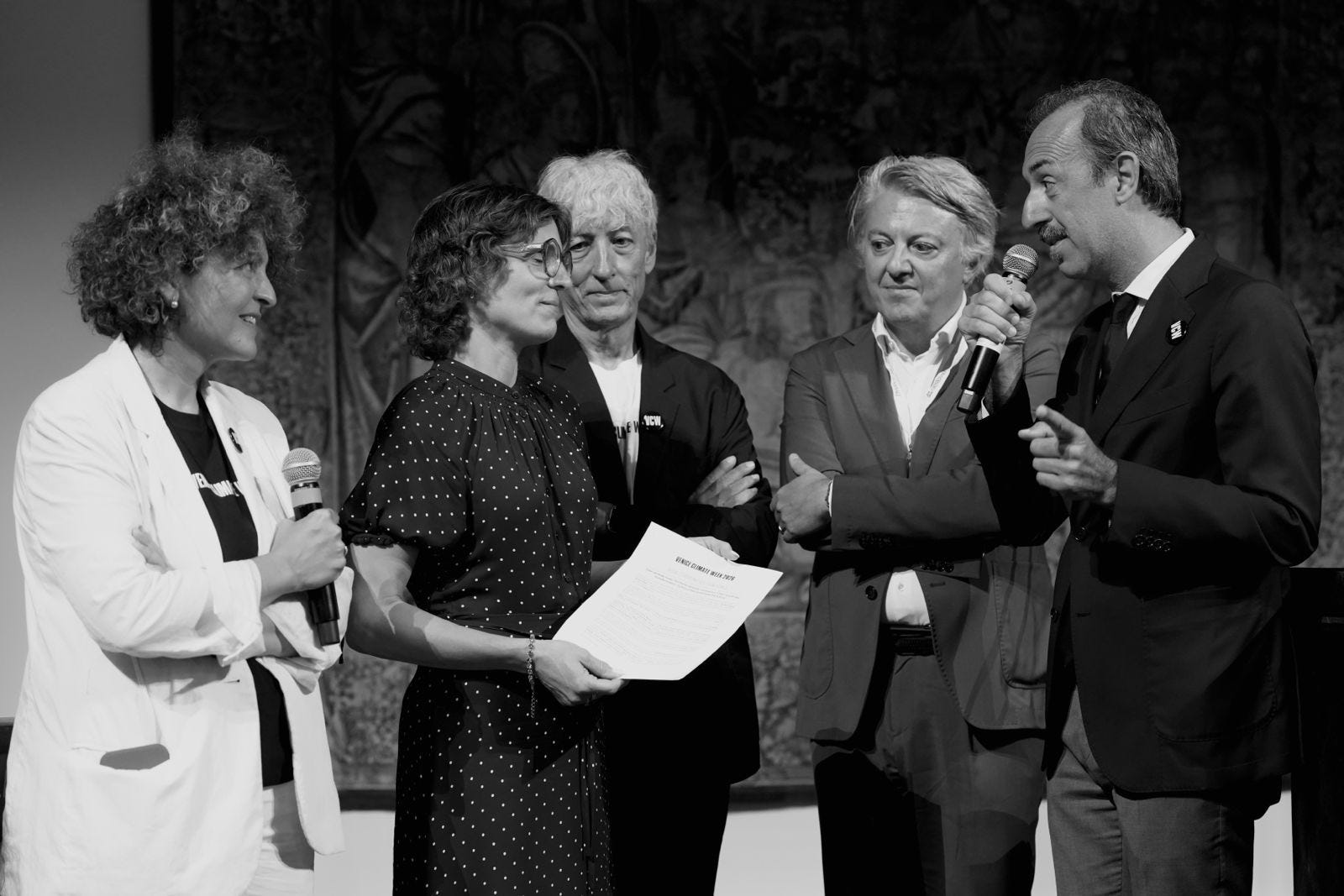
The remaining question is implementation. How do we turn this new vocabulary and these high‑level strategies into something that matters on the ground for cities, companies, and communities?
One answer emerging from Venice is the concept of Blue Communities. Building on the work done during the week, partners have proposed a Blue Communities Task Force, coordinated by Mayor Stefano Pisani and Professor Francesco Musco, that connects large metropolitan areas with coastal territories, islands, rural regions, and bioregions. Cities bring scale, investment capacity, and regulatory leverage. Territories offer living laboratories where integrated solutions around water, food, energy, biodiversity, and culture can be tested and refined.
The initial vision is to identify ten pilot Blue Communities across Europe and the Mediterranean, each paired with a counterpart in the Global South, creating a network of “resilience corridors” focused on knowledge exchange, capacity‑building, and regenerative development. For policymakers and investors, this could become a practical vehicle to align capital, innovation, and local governance with the new hydrological reality.
For leaders, Blue Communities are not a branding exercise. They are a governance and investment platform to align cities, territories, and capital with the age of water bankruptcy.
A Question For Those Who Lead
Global water bankruptcy tells us something many leaders have been reluctant to hear: the old world is over. The growth model that treated water as an underpriced, limitless input is no longer viable.
Venice Climate Week is now behind us, but the real work starts after the stages are dismantled. If you are a mayor, an entrepreneur, a student, or a policymaker reading this, I would invite you to do one uncomfortable exercise in the coming days: ask yourself whether your city, your company, or your community is still treating water as a cheap input – or as the strategic constraint it has already become.
Read the full article on Substack.